
The Farm

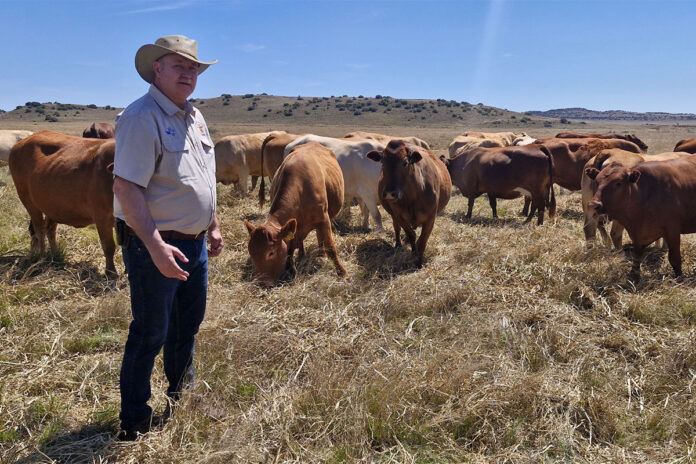
Dankbaar farm is situated between Venterstad and the Gariep dam. A harsh climate where the great Karoo melts into the Suurberg mountains. Temperatures can go anywhere from 49°C in the summer to -16°C in the winter. Rainfall can be quite unpredictable, at 450mm a year, and often only starts in the second week of January. This means the cattle are forced to graze on winter veld for a much larger part of the year.

The herd is expected to raise their calves and complete the breeding season in the mountains; with an elevation of 1312.4 m, steep inclines with rocky slopes it does not make for easy grazing. Because the animals are expected to cover long walking distances under such extreme conditions, it truly tests their physical capacity to the maximum. However, this harsh environment has allowed years of natural selection to refine the herd so that only those cows who have the ability to keep producing good calves every year without exception now remain.


The Breed

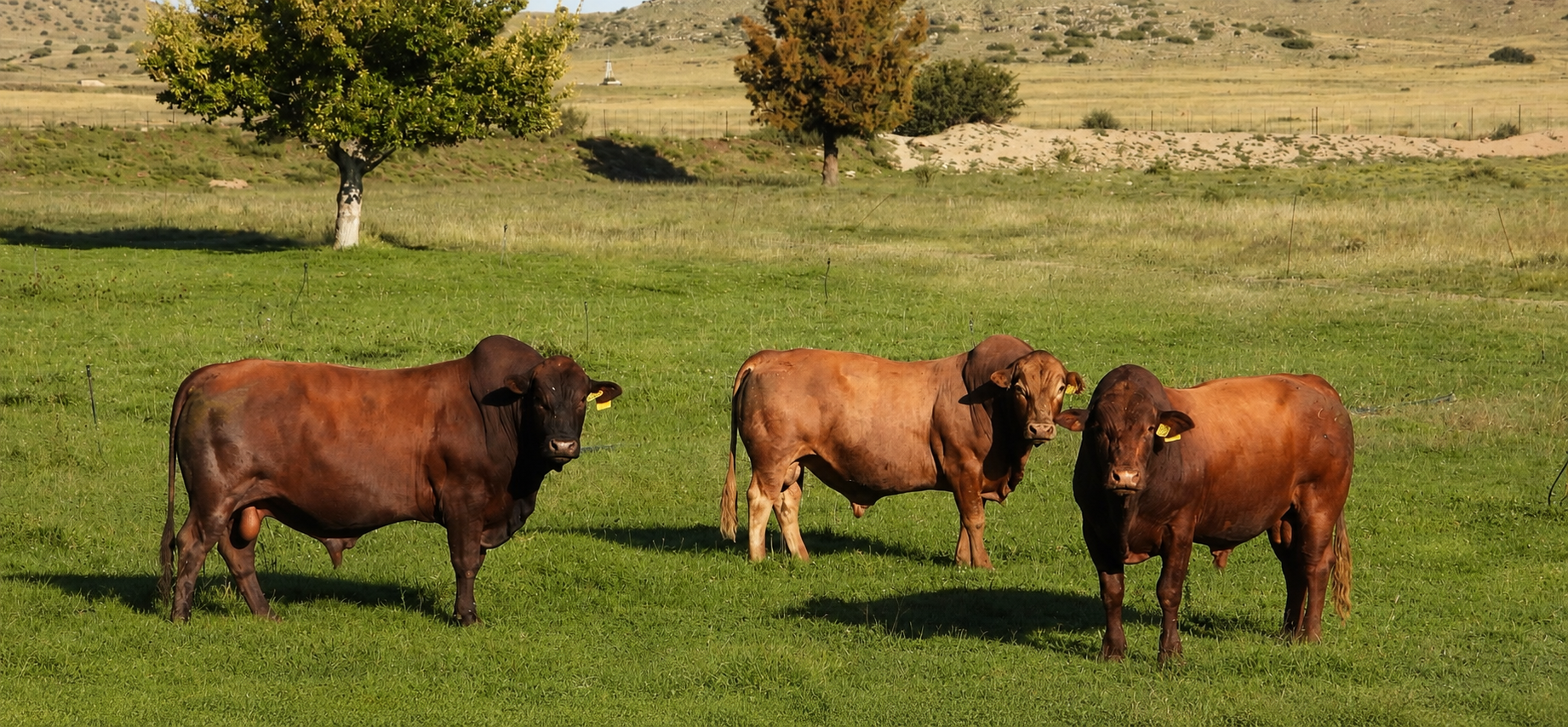
In the early 1940’s, agriculturalist Len Harvey identified a distinctive type of yellow Sanga cattle in what is now south west Zimbabwe. Estimated to have originated roughly 3000 years ago as a beef cattle hybrid between African Bos Taurus and Bos Indicus, Sanga cattle are an ancient composite breed that was refined over centuries of both human and natural selection. This meant these cattle were already well adapted to the climate and diseases faced by farmers in Southern Africa.

Rather than risking this adaptability by cross breeding, Harvey implemented a strict selection program to identify superior cattle among them. With backing from the Zimbabwe government he prioritised cattle that had strong fertility, efficient beef production, good temperament and uniformity. This herd was further refined by testing their performance when exposed to harsh climates. The Tuli Breeding Station was surrounded by a hot and dry landscape, with unpredictable rainfall, which often resulted in very poor grazing and low water availability. This resulted in only those cattle able to keep up production and fertility under nutritional stress, heat and long walking distances being retained in the breeding program.

By 1955 the Tuli was an officially recognised breed and it became known for its fertility under harsh conditions due to its adaptability. Over the years the Tuli has continued to boast with its exceptional fertility, all while improving beef production and cow efficiency. Now it is also known for its calving ease, maternal instinct, good carcass quality and efficient use of available forage. All these qualities have made the Tuli a breed to recon with, especially in a low input system.


The Breeder

Before he started farming, Christo Rothmann spent most of his time in the business world. First as a chartered accountant, then as a turnaround specialist for multiple JSE-listed companies, and later as the founder of his own group of companies. When the opportunity presented itself to purchase his father’s farm, he jumped at it. His vision was the same as for any other turnaround project: make it profitable. Dorpers seemed like a logical start for the Karoo, but predators and livestock theft hindered progress to such an extent that he decided a change was needed. Thus, his journey with the Tuli breed began in 2004.

After trialling multiple breeds on the farm, only one proved capable of meeting his profitability goals on the harsh Karoo veld without supplementation. He consulted multiple experts, including Mr Stefan van Wyk and Dr Johann van Rooyen, along with countless hours of research from other beef cattle experts, and formed a vision for his herd: profitability by improving the kilograms of beef produced per kilogram of cow maintained each year. That meant increasing the cow–calf wean ratio, keeping weaning weights in line with market demand, lowering inter-calving periods, while ensuring his animals could calve without assistance and maintain high conception rates without the need for intensive feeding.

As of 2026, Bushman’s Mountain Tulis have an average cow–calf wean (CCW) ratio of 50.2%, an average weaning weight of 226 kg per calf, and a conception rate of 94%. With careful selection, we hope to improve these figures in the years to come, thereby creating a lasting stud legacy of profitable cattle for the Karoo.